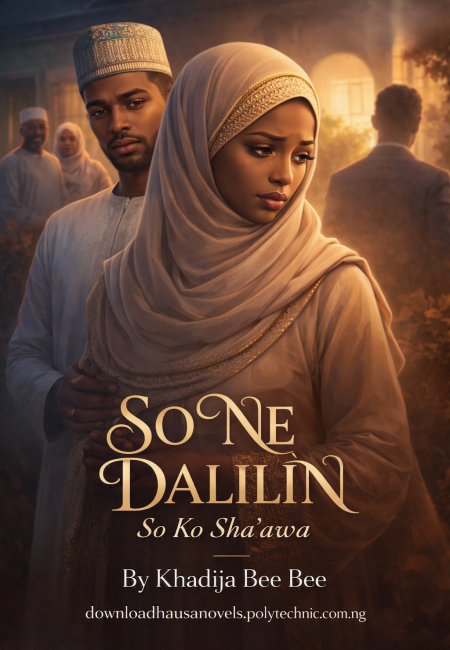
SO NE... DALILIN HAWAYENAH
Hook
What happens when the person a woman loves is not the man her family believes she should marry?
Farha has grown up surrounded by love, comfort, family loyalty, and a bond with Abdl-Jabbar that seems almost impossible to break. He has been part of her life since childhood, the dependable young man her family trusts and the person who has quietly carried a love for her for years. When he finally confesses what has been hidden in his heart, Farha finds herself standing before a future she never expected.
She accepts his love, but her heart is not completely satisfied.
Farha wants more than affection. She dreams of a husband whose wealth will give her parents a more comfortable life and whose position will match the future she has imagined for herself. That desire becomes dangerous when another young man enters her heart and makes her question whether the love she has accepted is truly the love she wants.
What begins as a beautiful family romance slowly turns into a battle between love, ambition, obedience, and desire. And when Farha begins making choices that her younger sister Iman desperately warns her against, the happiness of two closely connected families is placed in danger.
Sometimes tears do not come because love is absent.
Sometimes they come because love is not enough.
Summary
Farha and Khadijatul Iman are sisters whose lives have been shaped by a loving family and a deep friendship between their parents. Their fathers, Aliyu Abbas and Ibrahim, became close friends after meeting in Kaduna, and their families gradually became so intertwined that the children grew up almost as one family. Abdl-Jabbar, Ibrahim's only son, became especially close to Farha from childhood. Their relationship begins innocently, with him treating her like a younger sister, helping with her schoolwork and protecting her as she grows up.
As the years pass, however, childhood affection develops into something far more complicated. Abdl-Jabbar eventually realizes that what he feels for Farha is no longer ordinary family attachment. He loves her deeply, and he begins hoping that the relationship between their families will eventually lead to marriage. Yet instead of immediately involving their parents, he chooses to seek Farha's acceptance first. His confession changes the atmosphere between them, and Farha is forced to examine feelings she has never fully understood.
Farha eventually accepts Abdl-Jabbar's love, encouraged partly by Iman, who sees him as an ideal husband. He is educated, disciplined, respectful, hardworking, religious, and devoted to his parents. His love for Farha is also genuine, and when he finally secures employment, he sees the opportunity as another step toward building a future with her. Their relationship grows stronger, and both families begin to notice the closeness between them. For a while, everything appears to be moving toward the happy ending everyone expects.
But Farha has another dream that Abdl-Jabbar cannot easily satisfy. She wants a husband who can provide her family with extraordinary wealth and a lifestyle beyond what she has known. Although she appreciates Abdl-Jabbar's character and loves him, part of her remains focused on what she considers the ideal future. That dissatisfaction creates a dangerous weakness in her commitment. When Anwar Tijjani Ibrahim Milo enters her life, Farha becomes captivated by him, despite the concerns raised by Iman.
Iman immediately recognizes the danger. She knows her sister is risking the peace of their family for a desire that may not bring the happiness she expects. She reminds Farha of the sacrifices their parents have made for them and of the loyalty Abdl-Jabbar has shown since childhood. But Farha is increasingly convinced that she knows what is best for her own life. Her refusal to reconsider her choices eventually reaches a point where even Abdl-Jabbar is forced to confront the possibility that the woman he has loved for years may no longer want him.
The conflict becomes more painful because this is not simply a story about two people falling in love. It is about two families whose histories, sacrifices, promises, and expectations have become intertwined. Farha's decisions have the potential to hurt the very people who have spent their lives protecting her. As her heart pulls her in one direction and her family circumstances pull her in another, the question becomes unavoidable: will she recognize the value of what she already has before it is too late?
Genre
So Ne... Dalilin Hawaye is primarily a romantic family drama with strong elements of emotional suspense and social conflict. The story explores the complicated space between genuine affection and personal ambition, while also examining the influence of parents, family relationships, marriage expectations, education, financial status, and religious values.
Rather than presenting romance as a simple journey toward happiness, the story examines how easily love can become complicated when two people want different things from the future. Its emotional tension comes from the decisions characters make and the consequences those decisions may eventually produce.
Setting
The story moves through a Nigerian Muslim family environment, particularly around Kaduna and the communities connected to the families. The domestic setting is especially important because much of the emotional conflict develops within homes, between parents and children, and among siblings who know one another's deepest secrets.
Schools and universities also play an important role in the story. Farha and Iman grow through their education while Abdl-Jabbar pursues higher education and eventually begins working. These environments help demonstrate the characters' changing personalities as childhood gradually gives way to adulthood, relationships, marriage expectations, and financial responsibilities.
Core Themes
Love Versus Desire
At the heart of the novel is a difficult question: is loving someone enough to build a successful marriage? Farha cares deeply for Abdl-Jabbar, but she also desires a particular kind of future. Her struggle demonstrates how affection can become complicated when personal expectations enter the equation.
Family Loyalty
The two families have built their relationship over many years. Their friendship, sacrifices, and mutual support create an emotional foundation that goes beyond ordinary friendship. Because of this, an individual's romantic decision can affect an entire family network.
Obedience and Personal Choice
Farha's conflict with Iman introduces an important question about individual freedom and parental expectations. She believes she should have the final say over her marriage, while Iman worries that acting purely according to personal desire may lead to regret.
Wealth and Social Status
Money quietly influences several of Farha's decisions. Although she has grown up in a loving home, she wants a future with greater financial security and comfort. The story therefore examines whether material prosperity can truly replace character, loyalty, sacrifice, and genuine affection.
Sibling Friendship
Farha and Iman are not merely sisters. They are confidantes, companions, and protectors of each other's secrets. Their relationship becomes particularly powerful because Iman is willing to challenge Farha when she believes her sister is making a dangerous mistake.
Sacrifice
Abdl-Jabbar's relationship with Farha is built on years of patience and emotional investment. His efforts to become educated, find employment, support his parents, and prepare for marriage reveal the sacrifices he associates with love.
The Consequences of Impulsive Decisions
The story repeatedly warns that decisions made in the heat of emotion can produce consequences that are much harder to reverse. Farha's choices gradually transform what should have been a peaceful family relationship into a source of anxiety and uncertainty.
Key Characters
Fatima Farha Aliyu Abbas
Farha is the central female character and one of the most complicated personalities in the story. She is beautiful, confident, affectionate, and strongly attached to her own ideas about what her future should look like. She loves her family and cares about Abdl-Jabbar, yet her expectations concerning marriage and financial security make her vulnerable to choices that could ultimately cost her more than she expects.
Farha's greatest conflict is not simply choosing between two men. It is the struggle between what her heart feels, what her ambitions demand, and what her family believes will make her happy.
Abdl-Jabbar Ibrahim Umar
Abdl-Jabbar is portrayed as disciplined, educated, respectful, hardworking, and deeply attached to his parents. Having grown up as their only child, he understands responsibility from an early age. His relationship with Farha begins as childhood companionship before developing into genuine romantic love.
He does not simply want Farha because he finds her attractive. He has imagined her as part of his future for years. His greatest vulnerability is therefore the possibility of losing the woman around whom he has built so many hopes.
Khadijatul Iman
Iman is Farha's younger sister and closest confidante. She is more cautious, accommodating, and conscious of family values than Farha. Her role becomes particularly significant because she sees the dangers surrounding her sister before Farha is willing to acknowledge them.
Iman is not simply a supporting character. She becomes the voice of caution within the story, repeatedly challenging Farha to look beyond immediate desire and consider the consequences of her decisions.
Aliyu Abbas
Aliyu Abbas is Farha and Iman's father. His journey from modest beginnings toward greater stability demonstrates his determination to provide for his family. He also develops a deep affection for Abdl-Jabbar, partly because the young man fills a special place in his life.
His relationship with Ibrahim forms one of the foundations of the story, making the eventual romantic conflict much more significant than an ordinary marriage disagreement.
Binta
Binta, Farha's mother, is a loving and supportive woman who has endured years of uncertainty before becoming a mother. Her relationship with Aliyu and her devotion to her daughters reveal the warmth at the center of Farha's upbringing.
She also has a strong emotional connection with Abdl-Jabbar and views him as part of the extended family.
Ibrahim
Ibrahim is Abdl-Jabbar's father and Aliyu Abbas's close friend. His family has experienced financial difficulties, yet he remains committed to raising his son with good values. His friendship with Aliyu becomes an important thread connecting the two households.
Analytics and Insight
The strongest feature of the story is its emotional conflict. The central problem is not created by strangers or enemies but by people who genuinely care about one another. This makes the tension more compelling because every decision carries emotional consequences.
Farha is particularly interesting because she is neither completely heartless nor completely innocent. She genuinely develops feelings for Abdl-Jabbar, but she also has expectations that influence how she evaluates him. Her character creates an important question for readers: Can someone truly love another person while still believing that someone else might offer a better life?
Abdl-Jabbar represents the opposite side of that conflict. His love is built around patience, commitment, sacrifice, and the hope of eventually creating a family with Farha. His character allows the story to explore what happens when one person's lifelong devotion meets another person's uncertainty.
Iman functions as the emotional warning system of the story. She understands that Farha may be chasing an idea of happiness rather than recognizing the happiness already available to her. Her repeated attempts to reason with her sister create anticipation because readers can see the possibility of consequences long before Farha does.
The family structure also increases the stakes. If Farha simply rejected an ordinary suitor, the consequences might remain personal. Here, however, the proposed marriage is connected to years of friendship, trust, family affection, and shared history. That means Farha's eventual decisions have the potential to affect parents, siblings, friendships, and the future of two families.
The story therefore creates suspense through a simple but powerful uncertainty: Will Farha discover the difference between what she wants and what she truly needs before her choices become irreversible?
What Makes the Story Intriguing
The novel draws readers into a relationship that initially appears destined for happiness. Abdl-Jabbar loves Farha, Farha accepts him, Iman supports them, and both families appear pleased with the direction of events.
Yet beneath that happiness is an unresolved problem.
Farha still wants something more.
That single desire is enough to turn a promising romance into an emotional storm. The more she compares the man she has with the future she imagines, the more unstable her happiness becomes.
The story keeps readers wondering whether Farha will remain loyal to the relationship she has accepted, whether Abdl-Jabbar will continue fighting for her, and whether the advice she repeatedly dismisses will eventually become the truth she wishes she had listened to earlier.
A Thought From the Story
“Sometimes the heart does not cry because it has stopped loving. It cries because the person it loves may not be the person it chose to keep.”
Final Insight
So Ne... Dalilin Hawaye is ultimately a story about the dangerous distance between love and expectation. It asks readers to consider whether happiness is found in the person who promises everything the heart desires, or in the person whose character, loyalty, and sacrifice quietly prove their worth over time.
Farha's journey promises romance, family tension, difficult choices, emotional consequences, and the kind of uncertainty that keeps a reader asking one question after another.
Because by the time she realizes what she truly wants, the real question may no longer be whether she can choose the life she desires.
It may be whether that life will still be waiting for her.