GARKUWA
The Intrigue
What if a helpless pregnant woman was living among people who could only see her as a bird?
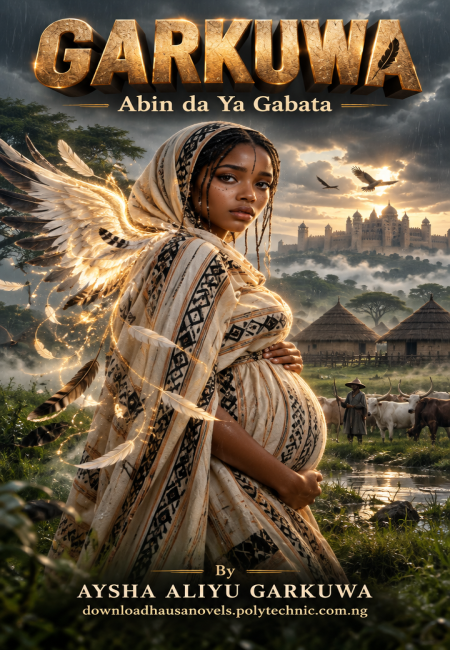
In a remote Fulani settlement in Cameroon, an ordinary Friday evening turns into an inexplicable encounter when a young girl named Parvina sees something no one else can see. To everyone around her, the creature being chased through the settlement is nothing more than a heavily pregnant Boleru bird. To Parvina, however, it is unmistakably a human woman in terrible pain, desperately trying to protect her unborn child.
When the supposed bird is injured, Parvina refuses to let anyone kill it. Her insistence seems childish at first, but what happens the following morning leaves the entire community shaken. Before their eyes, the creature transforms into a beautiful human woman.
The mystery is only beginning.
Twelve years later, the story moves to another Fulani settlement where old wounds, tribal tensions, spiritual mysteries, royalty, scholarship, faith, and a powerful family begin to converge. At the center of this unfolding world stands Sheikh Jabeer Habibullah Nuruddeen Bubayero, a respected young doctor, religious scholar, and member of the Joɗa royal family. Somewhere between the secrets of the past and the conflicts of the present lies the meaning of GARKUWA.
Summary
GARKUWA begins in Yahunde, the capital of Cameroon, within a prosperous Fulani settlement ruled by Arɗo Babayo. The settlement is alive with livestock, families, tradition, faith, and the rhythms of pastoral life. One Friday evening, four boys chase a large Boleru bird that has entered their surroundings. What initially appears to be an ordinary incident suddenly becomes disturbing when eight-year-old Parvina begins screaming that the bird is actually a pregnant woman. Nobody understands what she is saying because everyone else sees only a bird.
Parvina's conviction becomes impossible to ignore when the creature is injured. While the adults see a frightened bird, Parvina sees a suffering woman whose hand has been broken and whose pregnancy is dangerously advanced. She begs her family to save her, even defending the mysterious creature from those who want to kill it. Her compassion eventually leads to the woman being taken into the family home, where Parvina refuses to leave her side. Through the night, the supposed bird struggles with severe labor pains while Parvina remains convinced that a human being is suffering in front of them.
The following morning, the impossible finally happens. Before the terrified eyes of Arɗo Babayo and the members of his household, the Boleru bird transforms into a beautiful human woman. Fear spreads throughout the settlement as nobody can explain what they have witnessed. A respected spiritual figure, Sarkin Baka, eventually determines that the woman is not a spirit but a human being who has been transformed through sorcery. With the community's help, she receives treatment and gives birth to a baby girl. Yet even after her transformation, another mystery remains. She cannot speak, remembers almost nothing about her former life, and appears to have lost every connection to the identity she once possessed.
The community decides to protect her rather than abandon her. They hope that, when her memory returns, she will reveal her name, her family, her home, and the people searching for her. Parvina becomes deeply attached to her, having been the only person who recognized her humanity when everyone else saw an animal. Their unusual relationship becomes one of the emotional foundations of the story. The woman is no longer merely a mysterious stranger. She becomes part of a household that has unknowingly stepped into a much larger mystery.
Twelve years later, the narrative shifts to Rugar Bani in Shikan Local Government Area of Ɓadamaya State. The new setting introduces a much broader world filled with Fulani communities, neighboring tribes, religious differences, political tensions, agriculture, livestock, traditional authority, and long-standing grievances. The murder of Hashimu, the son of Arɗo Yabani, creates fresh anger within the Fulani community, but the elders urge restraint rather than immediate revenge. At the same time, another powerful world is introduced in the royal city of Modibbo Joɗa, where Sheikh Jabeer Habibullah Nuruddeen Bubayero emerges as a respected doctor, scholar, preacher, and member of the Joɗa royal family. As these worlds begin moving toward one another, the story hints that the mystery that began twelve years earlier is far from over.
Description
GARKUWA is a Hausa-language supernatural drama that blends mystery, Islamic themes, romance, family relationships, Fulani culture, royal intrigue, suspense, spiritual conflict, and social tension. Rather than remaining within one setting, the story expands across different communities and social environments, allowing the reader to experience both the intimacy of rural Fulani life and the grandeur of a royal city.
The early portion of the novel is set in a Fulani settlement in Yahunde, Cameroon. The environment is rich with livestock, rivers, vegetation, traditional leadership, family structures, Islamic worship, and pastoral culture. Later, the story moves to Rugar Bani in Shikan, Ɓadamaya State, where the narrative becomes larger in scope. The community exists alongside other ethnic and religious groups, creating an atmosphere where questions of coexistence, injustice, identity, and communal survival become increasingly important.
The royal setting of Modibbo Joɗa introduces another dimension. Here, religious scholarship, medicine, education, wealth, royal heritage, and public influence come together through Sheikh Jabeer Habibullah Nuruddeen Bubayero. His life connects the modern world of university education and medicine with the traditional authority of the Joɗa royal family and the spiritual responsibilities expected of a respected Islamic scholar.
Core Themes
At its heart, GARKUWA explores the power of compassion. Parvina's most important quality is not her ability to understand the supernatural mystery around her. It is her refusal to abandon someone simply because everyone else sees that person differently. Where adults see a bird, Parvina sees a human being in pain. Her response raises one of the story's central questions: how much can compassion reveal when ordinary perception fails?
The novel also explores the destructive consequences of hidden evil. The mysterious transformation of the pregnant woman introduces sorcery, suffering, and the possibility that someone's past can be deliberately erased. The woman knows she has a life somewhere, yet that life has been taken from her. Her eventual transformation therefore becomes not the end of the mystery, but the beginning of a search for identity.
Faith is another major theme. Islamic prayer, Qur'anic recitation, supplication, charity, spiritual healing, and trust in Allah are woven throughout the narrative. Sheikh Jabeer's public role as a religious teacher reinforces the importance of faith in the wider story, while the mysterious woman herself retains an inner connection to Allah even when she cannot remember her own identity.
The novel also examines communal injustice and the tension between patience and retaliation. The Fulani community in Rugar Bani faces violence and loss, yet its elders debate how to respond without allowing grief to become uncontrolled vengeance. This creates a conflict between justice, restraint, communal protection, and the desire for retribution.
Another important theme is identity. The mysterious woman loses her name, history, family, language, and social identity. Yet she remains herself beneath the transformation. Her story suggests that identity can be hidden without necessarily being destroyed.
Key Characters
Parvina is one of the earliest and most intriguing characters in the story. As a young girl, she possesses an extraordinary ability to see the suffering human being hidden behind the appearance of the Boleru bird. Her innocence allows her to recognize something the adults cannot. Her determination to protect the mysterious woman becomes one of the most important events in the opening of the novel.
Arɗo Babayo is the respected leader of the Fulani settlement in Cameroon. He is surrounded by elders, family members, herdsmen, and a large community. Although initially unable to understand Parvina's claims, he gradually becomes involved in the mystery and ultimately chooses to help the transformed woman rather than treat her as a threat.
The Mysterious Woman is arguably the central mystery of the opening narrative. She is discovered in the form of a Boleru bird while pregnant and injured. After being transformed back into a human being, she gives birth to a daughter but cannot remember her former identity. Her unanswered past becomes one of the novel's strongest sources of suspense.
Appa is Parvina's father and one of the people forced to confront the impossible transformation. His concern for his daughter and his willingness to help the mysterious woman place him directly inside the unfolding mystery.
Giɗaɗo is one of the younger boys in the household and has a special attachment to the bird because he has cared for it for months. His emotional reaction creates an interesting contrast with Parvina's perception. He sees the creature as his beloved pet while Parvina sees a human being.
Sarkin Baka serves as an important spiritual authority. His understanding of the mysterious transformation provides the first serious explanation for what happened to the woman. His intervention changes the community's response from fear to protection and treatment.
Sheikh Jabeer Habibullah Nuruddeen Bubayero becomes a major figure in the later portion of the story. He is presented as a young Fulani man connected to the Joɗa royal family, a doctor, a religious scholar, an imam, and a respected preacher. His public influence is evident from the large congregation that gathers to hear his Friday sermon. Yet his connection to the wider mystery remains one of the questions the story leaves hanging.
Jalaluddin, Sheikh Jabeer's younger brother, is introduced as part of the royal family's younger generation. His relationship with Jabeer adds another dimension to the family structure surrounding the Sheikh.
Analytics & Insight
The strongest narrative device in GARKUWA is the contrast between appearance and reality. The opening mystery works because the reader is placed inside a situation where different characters perceive the same being in completely different ways. Parvina's perspective challenges everyone else's understanding, creating suspense without immediately revealing the explanation.
The story also uses a delayed revelation structure. The transformation of the woman answers one question while creating several more. The reader learns that she is human, but not who she is, where she came from, who transformed her, or why she was placed in the form of a bird while pregnant.
The twelve-year time jump significantly expands the narrative scale. What begins as an intimate supernatural mystery develops into a much larger story involving communities, ethnic tensions, royal authority, religion, education, medicine, family history, and unresolved secrets.
Another notable feature is the use of cultural world-building. The novel spends considerable time establishing Fulani pastoral life, livestock, settlement structures, Islamic practices, traditional leadership, royal heritage, and communal relationships. This gives the supernatural elements a grounded social environment rather than placing them in an abstract fantasy world.
The introduction of Sheikh Jabeer also changes the narrative atmosphere. His entrance connects religion, royalty, medicine, education, and public influence. The contrast between the mysterious woman of the opening chapters and the highly respected Sheikh of the later chapters creates an obvious narrative question: how are these seemingly separate worlds connected?
That question becomes one of the reasons to continue reading.
A Quote to Capture the Story
“Sometimes the truth is hidden behind the very thing everyone believes they understand.”
This captures the central mystery of GARKUWA without revealing the revelations waiting deeper inside the story.
Why Readers Will Want to Continue
GARKUWA does not reveal all of its secrets at once. It begins with a question that seems impossible, answers part of it through an extraordinary transformation, and then opens an even larger mystery twelve years later.
Who was the woman before she became a bird?
Who transformed her?
Why was she chosen?
Where is her family?
What happened to her life before the transformation?
And what connection does the mystery have to the world of Rugar Bani, the Joɗa royal family, and Sheikh Jabeer Habibullah Nuruddeen Bubayero?
The answers are buried somewhere beneath years of silence, lost memories, spiritual mysteries, family histories, and secrets that have yet to surface.
GARKUWA is therefore more than a story about a woman transformed into a bird. It is a story about identity, faith, compassion, hidden history, communal conflict, and the strange ways in which one unexplained event can continue affecting lives long after it appears to be over.