ENGLISH DESCRIPTION
The script presents a deeply emotional and socially reflective narrative written in a religious and cultural tone, beginning with praise to Allah. It then transitions into a story that explores family structure, inequality, love, and emotional neglect within a traditional Hausa household. The story falls under the genres of drama, family fiction, social commentary, and emotional tragedy, with elements of cultural realism and religious reflection.
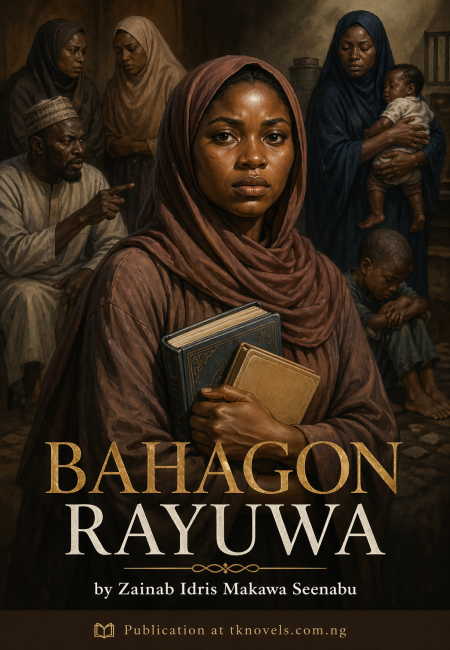
At the center of the story is a large polygamous household made up of three wives and many children. Although the family lives under one roof, the home is filled with silent competition, jealousy, and emotional division rather than unity. Each wife struggles to secure attention, survival, and advantage for her children. Among them, Rabi stands out as a patient and resilient woman who endures hardship silently while raising her six children with strong moral values despite poverty and neglect.
The story focuses strongly on Safiya, Rabi’s intelligent daughter, who balances school and household responsibilities. Through her perspective, we see the daily struggles of hunger, humiliation, favoritism, and emotional abuse within the household. Despite these challenges, education and faith become sources of hope and survival for the children.
A major theme is the contrast between kindness and cruelty, especially in how different mothers in the household treat one another’s children. While some children receive love and privilege, others suffer rejection and hardship. The narrative also highlights the role of religion, patience, and belief in destiny as coping mechanisms.
Overall, the story is a powerful depiction of polygamous family conflict, childhood struggle, poverty, and resilience, showing how children grow up shaped by both suffering and hope in a divided home.
HAUSA DESCRIPTION
Wannan rubutu yana gabatar da labari mai cike da motsin rai da kuma nazarin zamantakewa wanda aka fara da addu’a da yabo ga Allah. Daga nan sai ya koma labari da ke bayyana tsarin iyali, rashin daidaito, soyayya, da rashin kulawa a cikin gidan Hausawa na gargajiya. Labarin yana cikin nau’ukan drama, labarin iyali, sukar zamantakewa, da bakin cikin rayuwa, tare da ɗan taɓa hakikanin al’ada da tunani na addini.
A tsakiyar labarin akwai babban gida mai mata uku da yara da dama. Duk da suna zaune a gida ɗaya, ba hadin kai a tsakaninsu, sai dai kishiya, hassada da rarrabuwar zuciya. Kowace mace tana kokarin ganin ‘ya’yanta sun fi na sauran gata da kulawa. Daga cikinsu, Rabi ce ke da hakuri da juriya, wacce take jure wahala cikin shiru yayin da take tarbiyyar ‘ya’yanta shida da gaskiya duk da talauci da rashin kulawa.
Labarin ya fi karkata ga Safiya, ‘yar Rabi mai hazaka, wacce ke hada makaranta da aikin gida. Ta hanyar rayuwarta ne ake ganin wahalar yau da kullum kamar yunwa, wulakanci, wariya da rashin adalci a gidan. Duk da haka, ilimi da addini suna zama musu hanyar fata da tsira.
Babban jigon labarin shi ne bambanci tsakanin tausayi da zalunci, musamman yadda wasu uwaye ke mu’amala da yaran junansu. Wasu yara suna samun gata da soyayya, yayin da wasu ke fuskantar wahala da wulakanci. Labarin kuma yana nuna muhimmancin addini, hakuri da imani da kaddara wajen jure rayuwa.
A ƙarshe, labarin yana bayyana rikicin iyalan auren mata fiye da ɗaya, wahalar yara, talauci da juriya, yana nuna yadda rayuwar yara ke ginuwa tsakanin wahala da fata a cikin gida mai cike da rarrabuwar kai